Macros Matter: Nutrition’s Impact on Your Body Composition

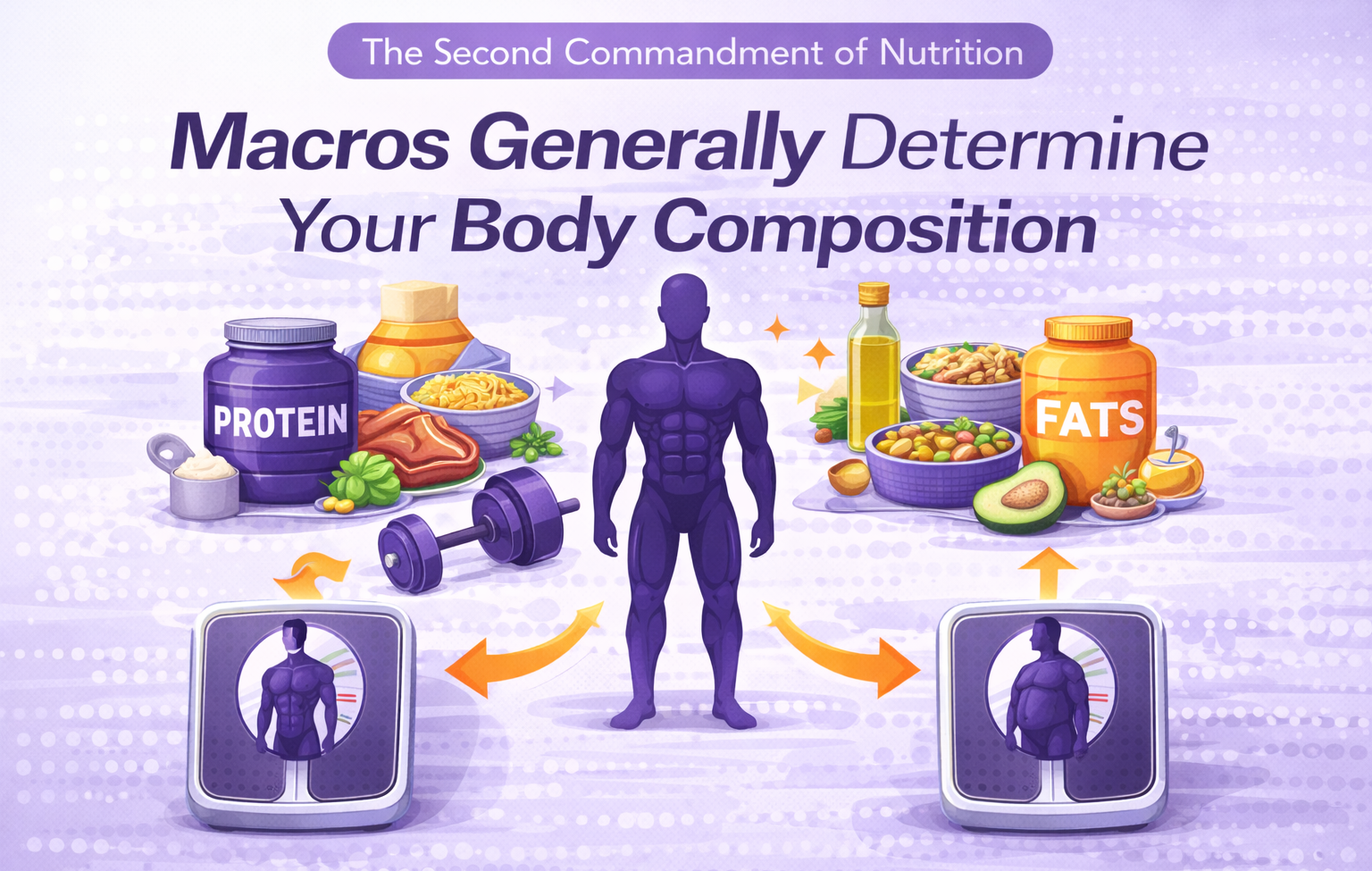
The Second Commandment of Nutrition: Macros Generally Determine Your Body Composition
The first commandment of nutrition explains that calories determine your body weight.
But once calories are accounted for, the next question becomes:
What is that weight made of?
Because losing 20 pounds does not always mean the same thing.
You could lose 20 pounds of mostly fat.
Or you could lose a mix of fat and muscle.
Both people would weigh the same on the scale, but their body composition would be very different.
That’s where macronutrients come in.
What Are Macronutrients?
Macronutrients are the three major nutrients that make up the calories in your diet:
- Protein
- Carbohydrates
- Fats
Each of these nutrients provides energy, but they also play different roles in how your body maintains muscle, stores fat, and performs physically.
Once calorie intake is controlled, these macronutrients help determine what kind of tissue your body gains or loses.
Body Weight vs Body Composition
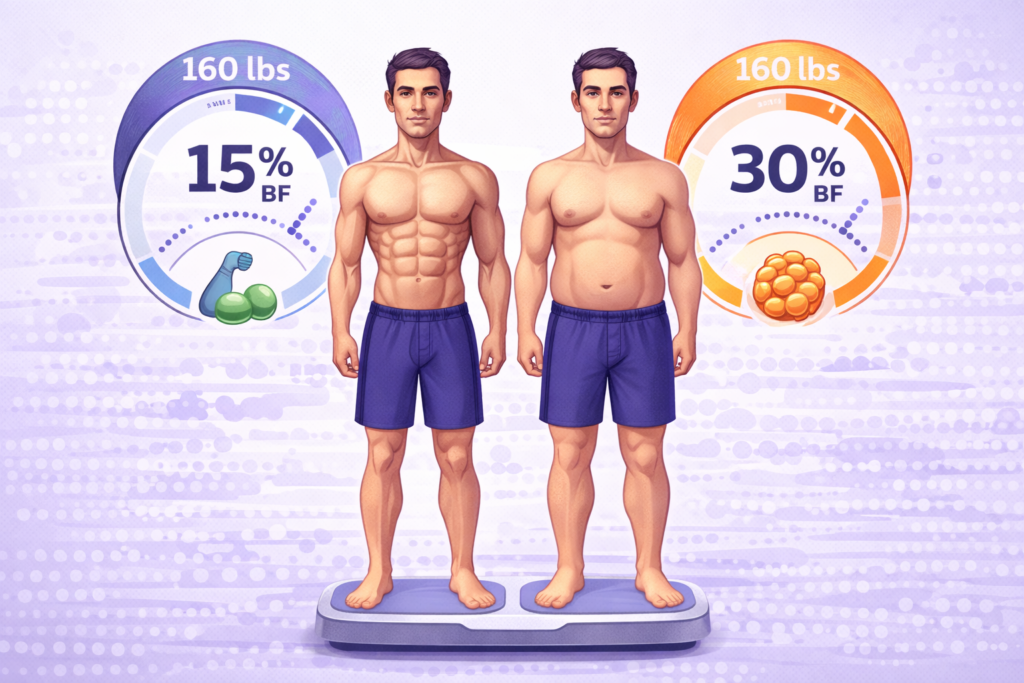
Two people can weigh exactly the same and look completely different.
One might have a higher percentage of body fat and less muscle.
The other might have more muscle and less body fat.
The scale would show the same number, but their physiques, strength, and overall health markers could be dramatically different.
That difference comes largely from training and macronutrient intake over time.
Protein Helps Preserve and Build Muscle
Protein is the most important macronutrient when it comes to body composition.
Adequate protein intake helps your body:
- maintain muscle while dieting
- recover from resistance training
- build new muscle tissue over time
When calories are reduced for fat loss, your body has less energy coming in.
Without enough protein and strength training, your body may break down muscle tissue along with body fat.
Maintaining adequate protein helps prevent that.
Resistance Training Signals the Body to Keep Muscle
Protein alone is not enough.
Your body also needs a reason to keep muscle.
That reason comes from resistance training.
Lifting weights or performing other forms of progressive resistance training sends a signal to your body that muscle tissue is still needed.
When protein intake and resistance training are combined, your body is much more likely to:
- retain muscle during fat loss
- build muscle during periods of maintenance or surplus
Carbohydrates and Fats Support Energy and Performance
Carbohydrates and fats are often debated in nutrition, but both primarily serve as energy sources.
Carbohydrates help support:
- training performance
- recovery
- high-intensity exercise
Fats help support:
- hormone production
- cellular function
- long-term energy needs
While these two macros play important roles in overall health and performance, they generally influence energy availability more than they influence muscle retention directly.
The Goal: Lose Fat, Keep Muscle
When people say they want to “lose weight,” what they usually mean is:
lose body fat while keeping muscle.
That outcome comes from combining three key factors:
- a calorie deficit to reduce body weight
- adequate protein intake
- consistent resistance training
Together, these help guide your body toward losing mostly fat rather than muscle.
The Takeaway
Calories determine whether your body weight goes up or down.
But macronutrients — especially protein — play a major role in determining what that weight consists of.
Two people may lose the same number of pounds, but the person who prioritizes protein and resistance training will almost always end up with a better body composition.
That’s why the second commandment of nutrition is: