Calories Determine Your Body Weight: The First Commandment of Nutrition

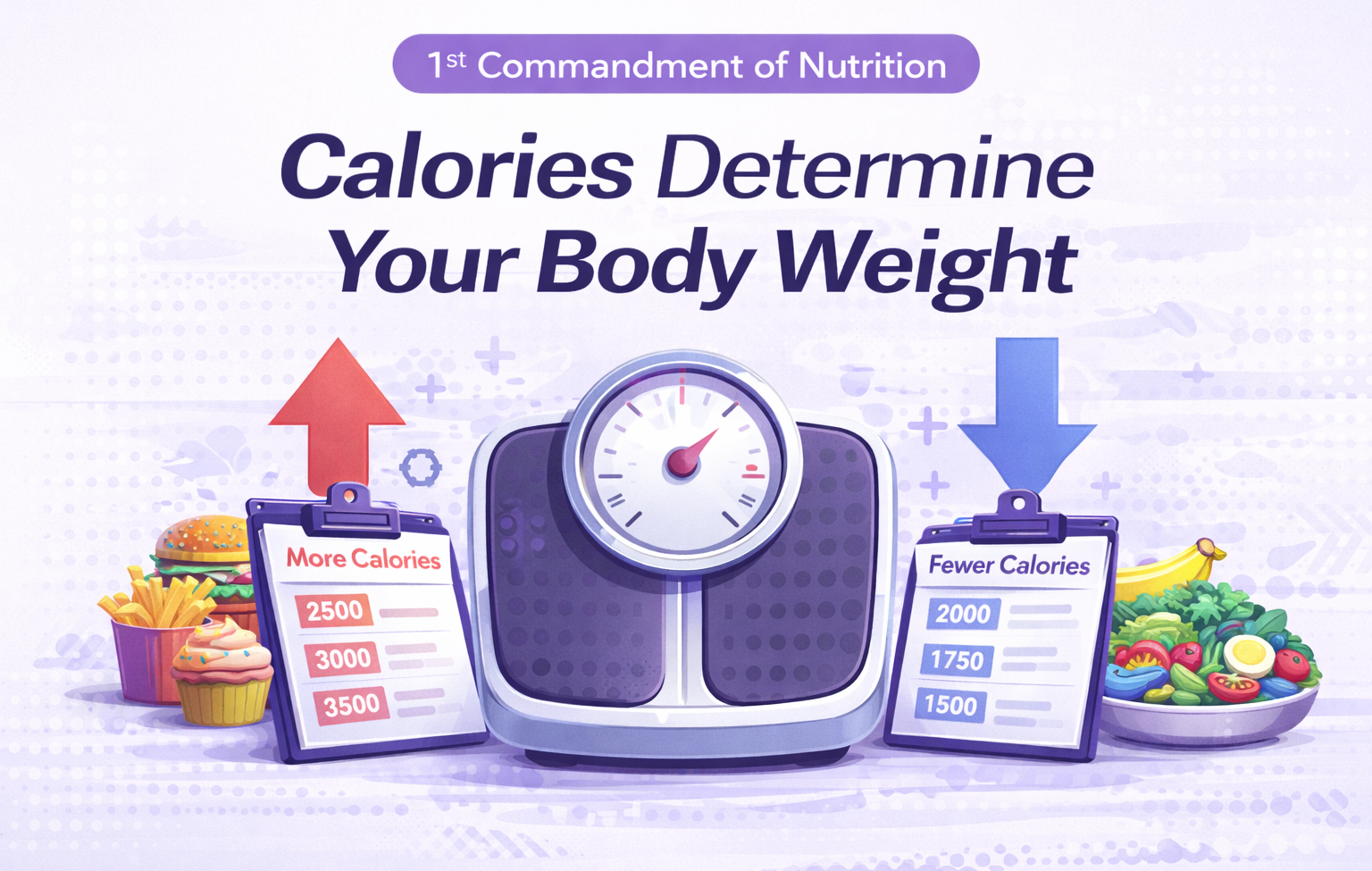
When it comes to changing your body weight, calories are the first thing you need to understand.
This is Day 2 of the Swole30 Challenge, and it is the most important nutrition lesson in the series. If you want to lose fat, get leaner, or understand why your weight is changing, start here: energy balance matters.
Calories Determine Whether Your Weight Changes
Calories are a measurement of energy. Your body uses energy to stay alive, move, train, digest food, and perform every other task required throughout the day.
If you consistently eat more calories than your body uses, your weight will tend to increase. If you consistently eat fewer calories than your body uses, your weight will tend to decrease. If you eat around the amount your body uses, your weight will tend to remain relatively stable.
This relationship is called energy balance. It applies to everybody, although the number of calories each person needs—and the rate of change—will vary.
Genetics and Metabolism Do Not Cancel Out Energy Balance
Your genetics, metabolism, activity level, medications, sleep, stress, and health conditions can all affect how many calories you burn and how easy it is to maintain a certain intake. They influence the numbers on either side of the equation; they do not create a separate set of rules for body weight.
That is why two people can eat the same number of calories and see different rates of weight change, while the basic principle still applies to both.
Every Successful Weight-Loss Diet Creates a Calorie Deficit
Low-carb, keto, paleo, intermittent fasting, plant-based, and high-protein diets can all work. When they lead to weight loss, they share one underlying mechanism: they create a calorie deficit.
Sometimes the deficit is intentional. Sometimes it happens because a diet removes foods, drinks, or eating habits that previously contributed extra calories. The strategy can vary. The energy balance still has to work.
Does It Matter Where the Calories Come From?
For body weight, total calorie intake is the primary factor. The scale does not know whether your calories came from rice, steak, cookies, olive oil, or a protein shake.
That does not mean food quality is irrelevant. Food choices matter for protein, training performance, fullness, digestion, micronutrients, and long-term health. A diet built around protein, fruits, vegetables, and minimally processed foods is usually easier to use for fat loss than a diet made mostly of foods that are easy to overeat.
The accurate way to say it is this: calories determine the direction of your body-weight change, while food quality influences how healthy, satisfying, and sustainable your diet is.
Why the Scale Can Be Confusing
Calories determine the long-term direction of your weight, but the scale can move up and down from day to day. Water, sodium, carbohydrates, digestion, hard training, hormonal changes, and the amount of food in your digestive system can all affect short-term weight.
Use consistent weigh-ins and watch the average trend over several weeks. If your average weight is not moving in the direction you want, your current calorie intake is probably close to your current energy needs—even if you believe you are eating in a deficit.
How to Use This Information
If you want to lose body fat, create a manageable calorie deficit. You do not need to slash your food intake or follow a crash diet.
- Track your food for a short period to learn what you are actually eating.
- Pay attention to calorie-dense foods, drinks, sauces, oils, and snacks.
- Build meals around protein and high-fiber foods.
- Keep resistance training in your routine.
- Monitor your average body weight for two to four weeks.
- Adjust your intake gradually if your trend is not changing.
If you want to gain weight and build muscle, you generally need a consistent calorie surplus along with progressive resistance training and enough protein. If you want to maintain your weight, your average calorie intake needs to stay close to your average energy expenditure.
Calories Are Not the Whole Nutrition Conversation
Calories are the first commandment because they determine what happens to your body weight. They are not the only thing that matters. Protein matters for maintaining and building muscle. Carbohydrates and fats can support training, recovery, and satisfaction. Vitamins, minerals, fiber, hydration, sleep, and physical activity all contribute to your health and performance.
But if your goal is to change the number on the scale, calories have to be part of the conversation.
The Takeaway
If you remember one thing, remember this: calories determine whether your body weight goes up, down, or stays relatively stable.
Your genetics and metabolism affect how many calories you need. Food quality affects your health and how easy your diet is to follow. But no diet, food, supplement, or exercise plan can bypass energy balance.
Once you understand that, nutrition becomes much easier to make sense of. Choose the eating style that fits your life—but to change your weight, you must address your calorie intake.
This article accompanies Day 2 of the Swole30 Challenge, created by Coach Boski.
Body weight is not the only thing that matters for health.
But it absolutely does matter.
Your body weight influences a wide range of things including joint stress, cardiovascular risk, metabolic health, physical performance, and even daily energy levels. It’s not the only metric that matters — but it’s one that affects a lot of others.
Because of that, understanding what actually controls body weight is incredibly important.
And the answer is much simpler than most people expect.
Calories Determine Your Body Weight
Calories control whether your weight goes up, down, or stays the same.
If you consistently eat more calories than you burn, your weight will go up.
If you consistently eat fewer calories than you burn, your weight will go down.
If you eat roughly the same amount of calories that you burn, your weight will stay relatively stable.
This principle is known as energy balance, and it is the single biggest driver of body weight change.
Every Diet Works the Same Way
There are hundreds of different diets out there.
Low carb.
Keto.
Paleo.
Intermittent fasting.
Whole food diets.
Plant-based diets.
But every diet that successfully causes weight loss works for one fundamental reason:
It creates a calorie deficit.
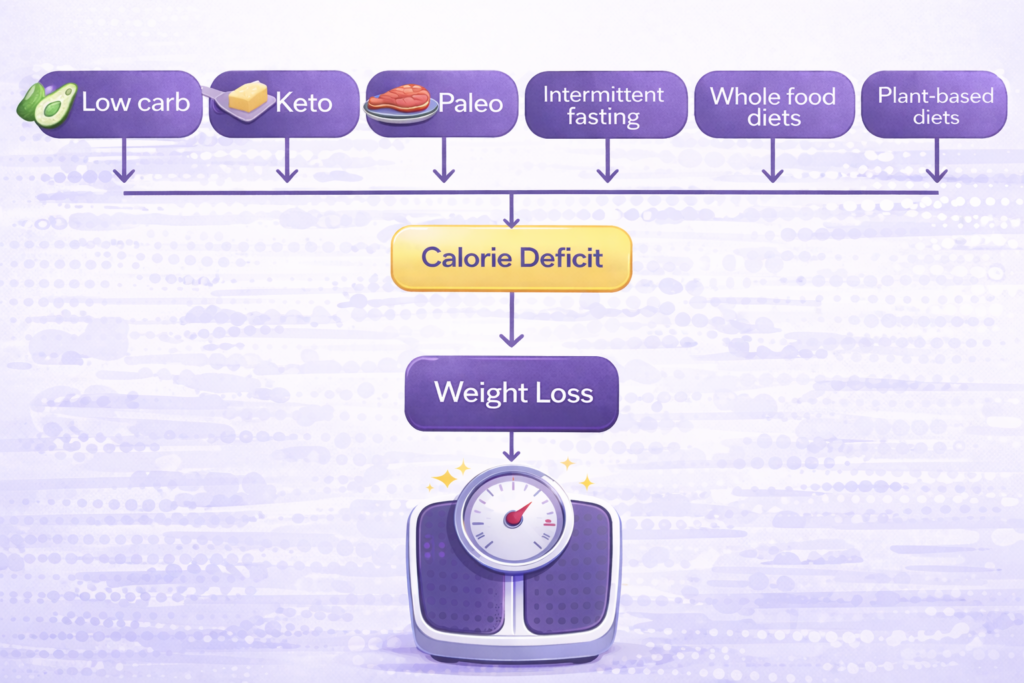
Sometimes this happens intentionally. Other times it happens accidentally because the diet removes certain foods or eating patterns that previously added extra calories.
But the mechanism is always the same.
When your body consistently receives less energy than it needs, it makes up the difference by pulling energy from stored body fat.
Where Calories Come From Does Not Change Your Weight
This is one of the most misunderstood parts of nutrition.
People often believe certain foods cause weight gain or fat loss regardless of calories. But when it comes to body weight, the scale only reflects energy balance.
Your body weight does not measure:
- how organic your food was
- how “clean” your diet is
- whether foods were processed or unprocessed
- whether carbs or fats were higher
Those factors may matter for other aspects of health, but they do not directly determine whether your weight goes up or down.
If two diets contain the same number of calories, they will produce very similar weight changes, even if the foods look completely different.
The scale only reflects whether you were in a calorie surplus or a calorie deficit recently.
Your Body Is Tracking Energy, Not Food Labels
Your body does not understand concepts like:
- organic
- clean eating
- processed vs unprocessed
- “bad” foods vs “good” foods
What your body actually tracks is energy.
Calories are simply a unit of energy.
If more energy comes in than your body uses, the extra energy gets stored.
If less energy comes in than your body uses, your body pulls from stored energy to make up the difference.
The result shows up as changes in body weight over time.
Weight Is Not the Only Metric — But It Still Matters

Excess weight, obesity more deadly than previously believed
Some people respond to this idea by saying that weight doesn’t matter, only health does.
It’s true that weight alone doesn’t tell the whole story.
Body composition, fitness level, diet quality, sleep, stress, and lifestyle habits all matter too.
But body weight still plays a meaningful role in many health outcomes, including:
- blood pressure
- insulin sensitivity
- cardiovascular risk
- joint stress
- mobility and physical function
Understanding how weight actually changes allows you to control it intentionally, rather than relying on confusion or guesswork.
The Takeaway
If you remember nothing else about nutrition, remember this:
Calories determine whether your body weight goes up, down, or stays the same.
Food quality matters for health.
Macros matter for body composition.
Micronutrients matter for long-term health.
But when it comes to body weight itself, the primary driver is energy balance.
Once you understand that, the rest of nutrition becomes much easier to make sense of.