The 10 Commandments of Nutrition

Nutrition gets confusing because people try to do too many things at once. Fat loss, health, muscle gain, longevity, hormones, gut health… it all gets blended together until nothing makes sense.
The reality is that nutrition becomes much simpler when you understand the few core principles that actually matter.
Think of these as the Commandments of Nutrition — the rules that explain how body weight, body composition, and health actually work.
1. Calories Generally Determine Your Weight
Calories control whether your weight goes up, down, or stays the same.
If you consistently eat more calories than you burn, your weight will go up.
If you consistently eat fewer calories than you burn, your weight will go down.
Every diet that “works” for weight loss works because it eventually creates a calorie deficit, whether people realize it or not. It also does NOT matter how they create that deficit.
2. Macros Generally Determine Your Body Composition
Once calories are controlled, macronutrients (protein, carbs, and fats) influence what that weight is made of.
Adequate protein and resistance training help your body retain or build muscle, while fat loss comes primarily from stored body fat.
Two people can weigh the same but look completely different depending on how much muscle they carry. That difference comes largely from training and macronutrient intake.
3. Micronutrients Support Health
Micronutrients — vitamins and minerals — don’t directly determine your weight, but they play a big role in your overall health and performance.
Things like iron, potassium, magnesium, and vitamins all contribute to how well your body functions.
A diet made mostly of highly processed foods might still allow weight loss, but it may not support optimal health long term.

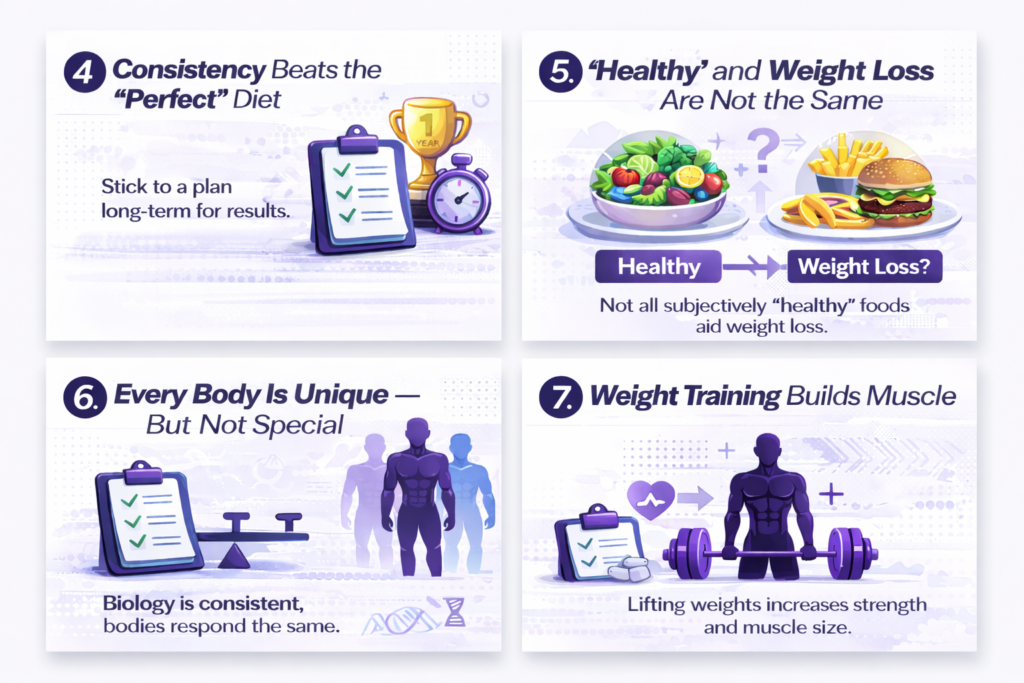
4. Consistency Beats the “Perfect” Diet
The best diet isn’t the one that looks the most impressive on paper.
It’s the one you can stick to consistently.
A slightly imperfect plan executed for years will always outperform the “perfect” diet that only lasts a few weeks. Pick one you like and go… it really doesn’t matter which one.
5. “Healthy” and “Weight Loss” Are Not the Same
People often use the word healthy as if it automatically means fat loss, but they are not synonyms.
Someone can eat foods considered “healthy” and still gain weight if they consistently eat too many calories.
Likewise, someone could technically lose weight while eating mostly processed foods if calories remain in a deficit.
Both health and body composition matter — but they are different variables.
6. Every Body Is Unique — But Not Special
Everyone has individual preferences, habits, genetics, and lifestyles.
But the fundamental rules of nutrition still apply to everyone.
Calories determine weight change. Protein supports muscle. Consistency drives results.
Your body may be unique, but it’s still operating under the same biological principles as everyone else.
7. Weight Training Builds Muscle
If building or maintaining muscle is a goal, weight training is essential.
Cardio is great for conditioning and health, but muscle growth requires progressive resistance training.
Without that stimulus, your body has very little reason to hold onto muscle while dieting. So if you also want to LOOK your best, lift some weights.
8. There Are No “Fat-Burning” Foods or Exercises
No food directly burns body fat.
No specific exercise magically melts fat off your body.
Fat loss happens when your body needs to pull energy from stored fat because you are in a calorie deficit.
Some foods may be more filling and some exercises may burn more calories, but none of them bypass the fundamental rules of energy balance.
9. You Cannot Spot Reduce Fat
Doing hundreds of ab exercises will not specifically burn belly fat.
Doing triceps exercises will not specifically remove arm fat.
Fat loss occurs systemically across the body, and genetics largely determine where fat comes off first or last.
10. Supplements Rarely Make a Meaningful Difference
Most supplements promise dramatic results but deliver very little.
The biggest factors in progress will always be:
- calorie intake
- protein intake
- training consistency
- sleep
- long-term adherence
Supplements can occasionally fill small gaps, but they rarely change outcomes in a meaningful way.
The Bottom Line
Nutrition doesn’t have to be complicated.
If you remember the basic commandments — calories control weight, macros influence body composition, and consistency drives results — most of the confusion disappears.
Focus on the fundamentals, stay consistent, and the results will take care of themselves.